Brand Protection Platform
Corsearch needed to consolidate two competing legacy platforms into a single brand protection product serving IP analysts globally. As the sole designer across 6 engineering teams and 4 product owners, I led end-to-end design of the unified platform, built the design system from scratch, and held the product direction together when product leadership collapsed mid-project.
I was the only designer responsible for output across 6 engineering teams and 4 product owners. No design system, no documented patterns, just two legacy products and strong opinions.
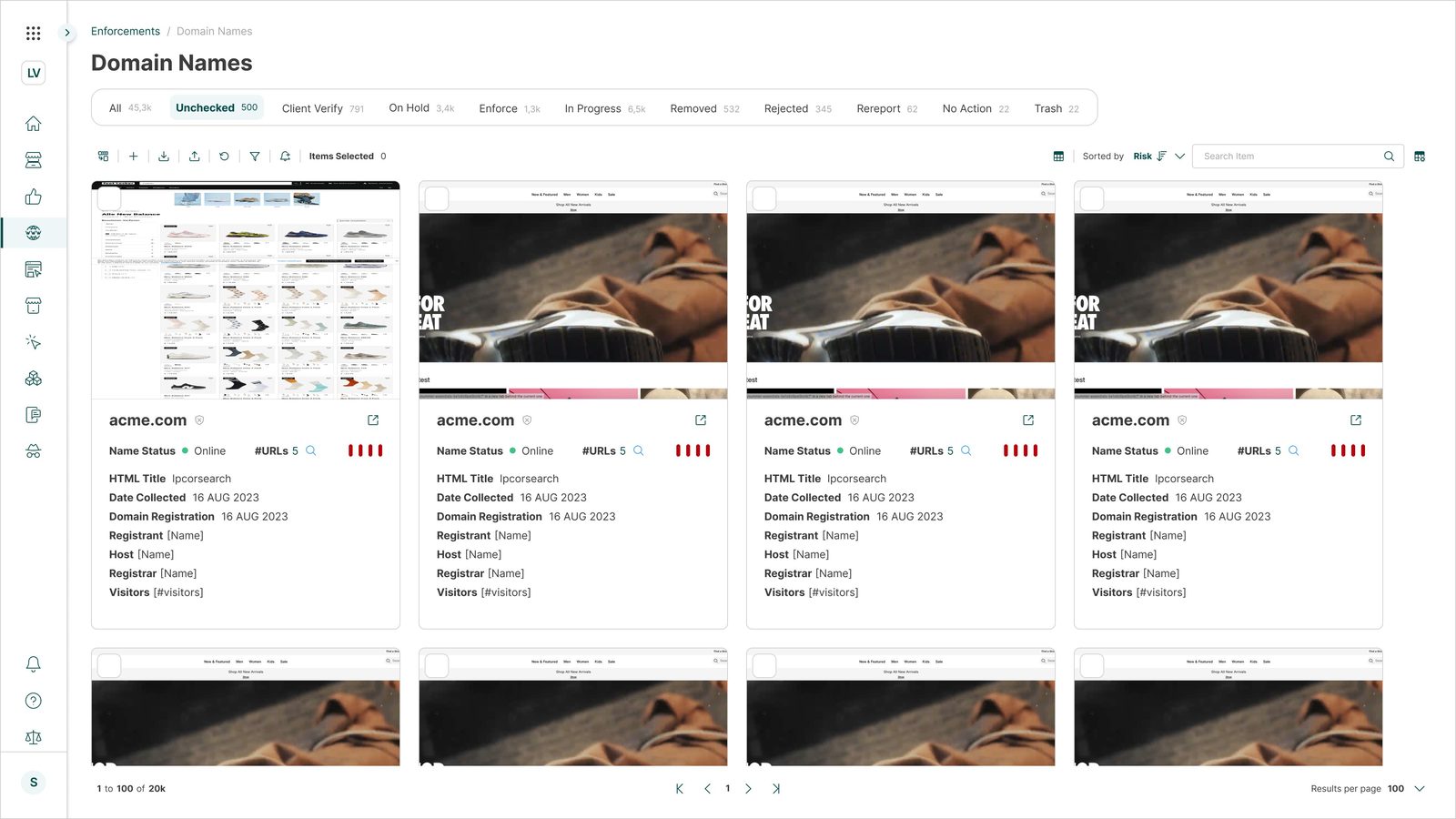
Corsearch was the result of an acquisition merging two brand protection companies. Talisman was powerful but unintuitive, analysts spent weeks learning it and routinely completed tasks in Excel and email rather than the platform. Zero had more design intent but significantly less capability. Enterprise clients were split between both, requiring analysts to maintain proficiency in two systems simultaneously.
Internally, stakeholders from each legacy company actively advocated for their own platform. I joined as the only designer, responsible for the entire design output across 6 engineering teams and 4 product owners, covering marketplace enforcement, domain enforcement, AI features, reporting, admin configuration, and platform tooling.
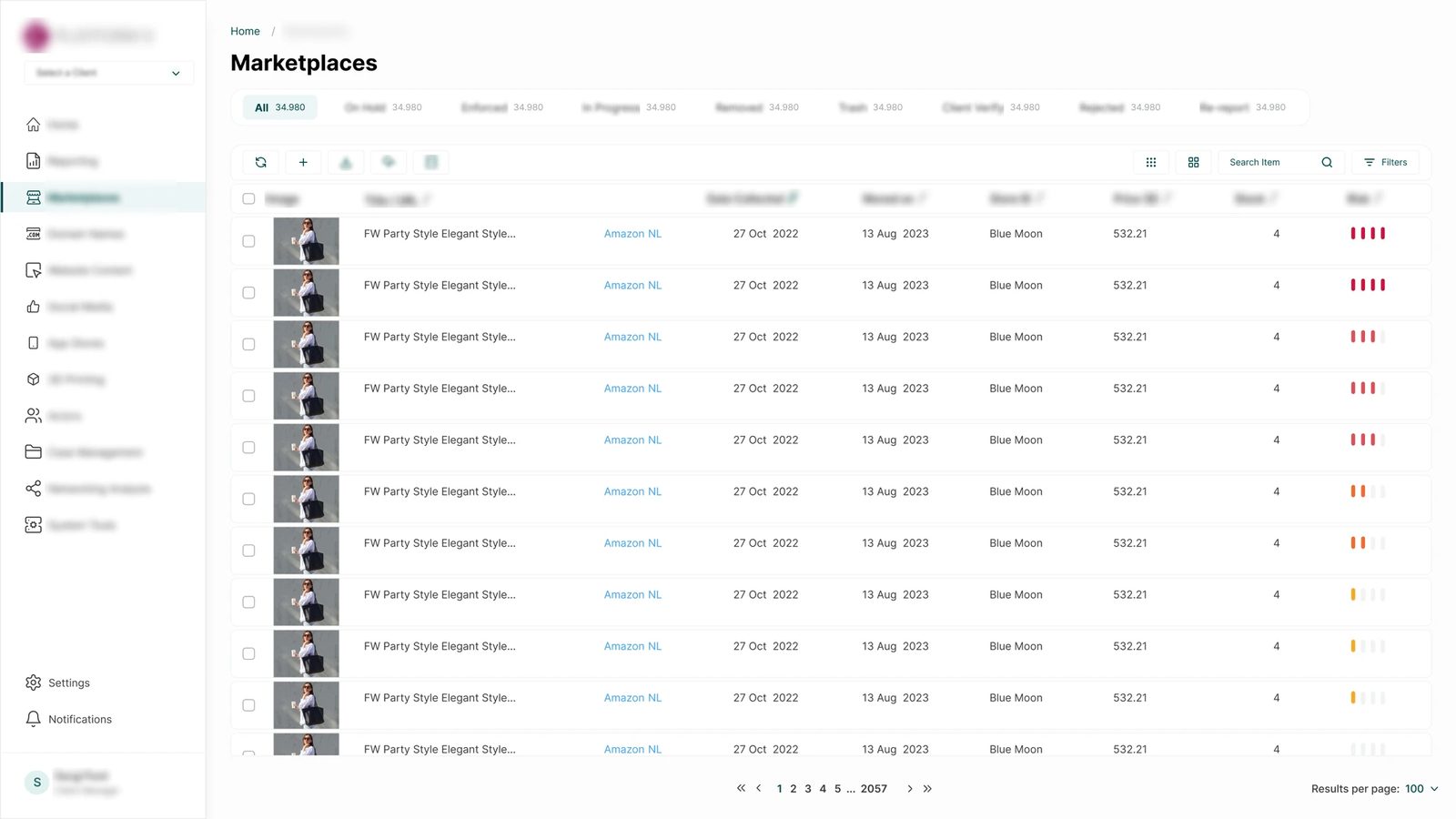
Asking users to describe their ideal workflow with no constraints produced something fundamentally better than either legacy platform offered.
We interviewed 12 users, six from each platform, across different seniority levels. The key question in every session: describe your ideal workflow if there were no technical, legal, or platform constraints at all. This approach bypassed years of accumulated workarounds and produced a workflow that was structurally better than anything either platform had built.
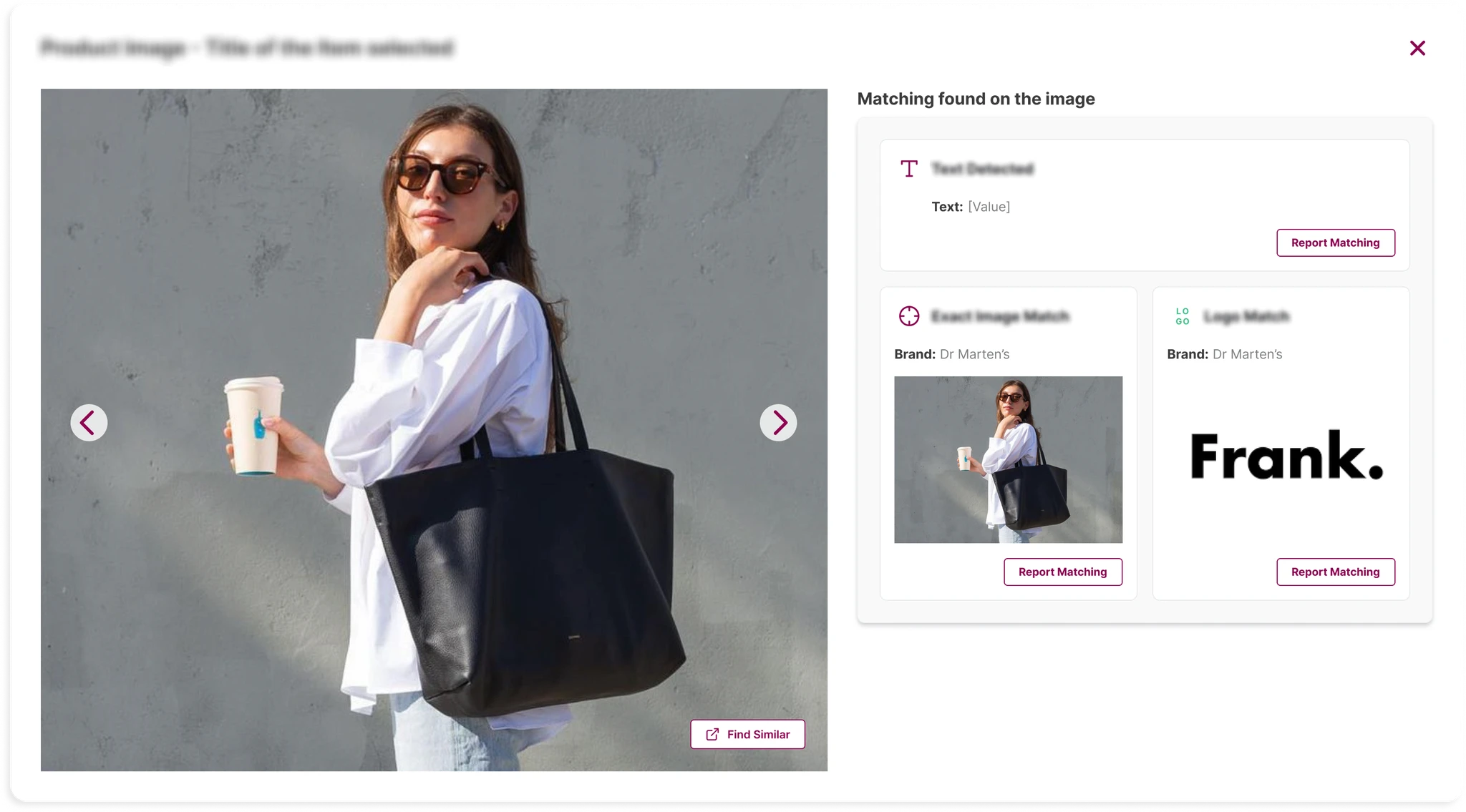
Google Analytics and Pendo data confirmed what interviews surfaced: a significant portion of enforcement work was happening outside the product entirely, in spreadsheets, external databases, and email. The research also uncovered industry fragmentation within the analyst population. Fashion and consumer goods analysts identified counterfeits by image. Regulatory and pharmaceutical analysts worked almost entirely from text. We also found unexpected change resistance, analysts who had used a platform for years were reluctant to learn something new even when the new approach was demonstrably faster.
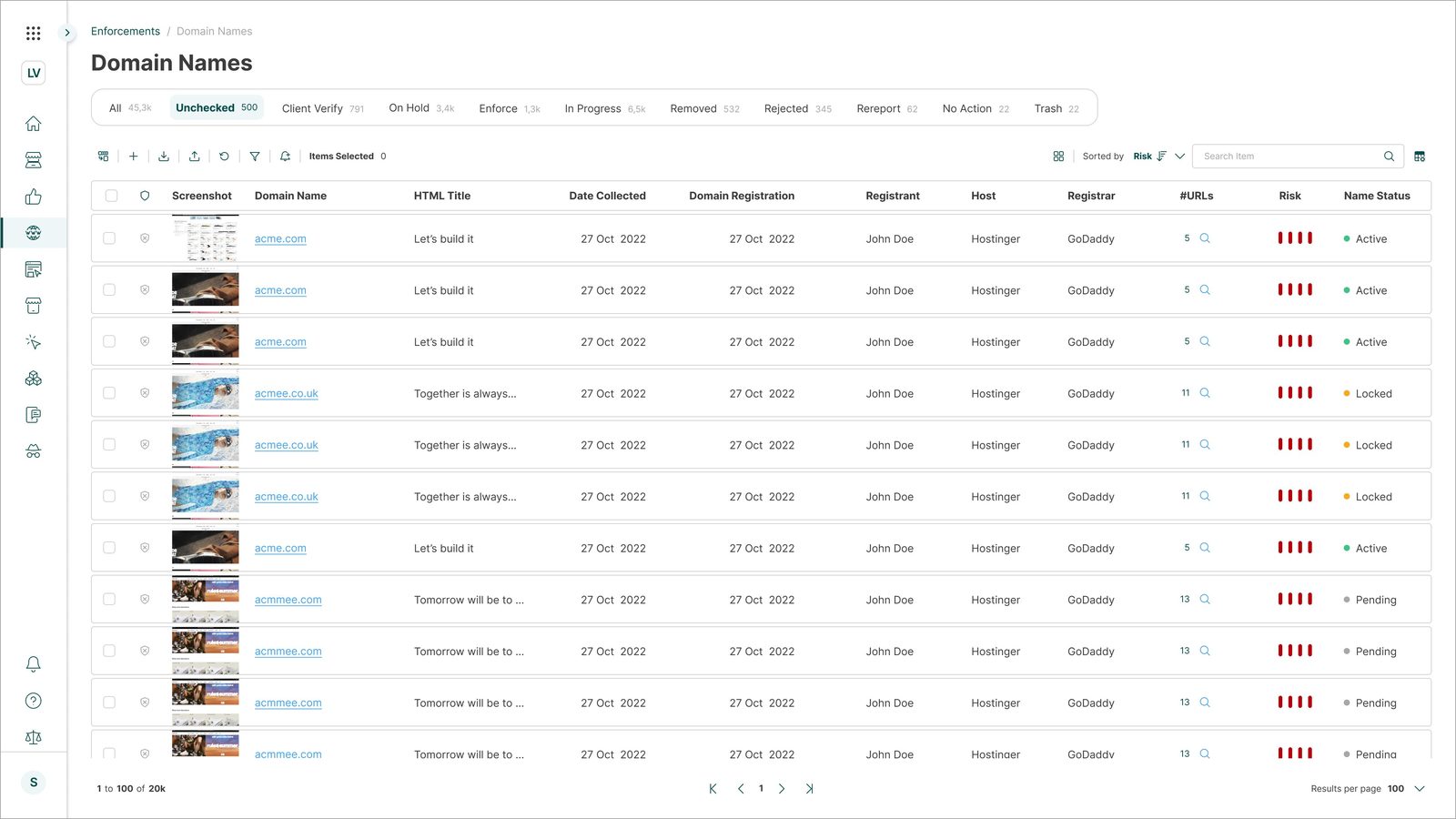
Every design decision had to be grounded in research data, not legacy platform loyalty. If someone disagreed, we invited them to challenge the data, not the design.
Senior stakeholders from both legacy companies regularly referenced their own platform as the correct approach. We established a consistent principle: include users from both platforms in every research session, present findings to the full stakeholder group, and let the data drive the decision.
Speaking up when senior managers were framing problems incorrectly required conviction. But it built credibility. By the end of year one, research-led decision making had largely displaced legacy-platform-as-reference.
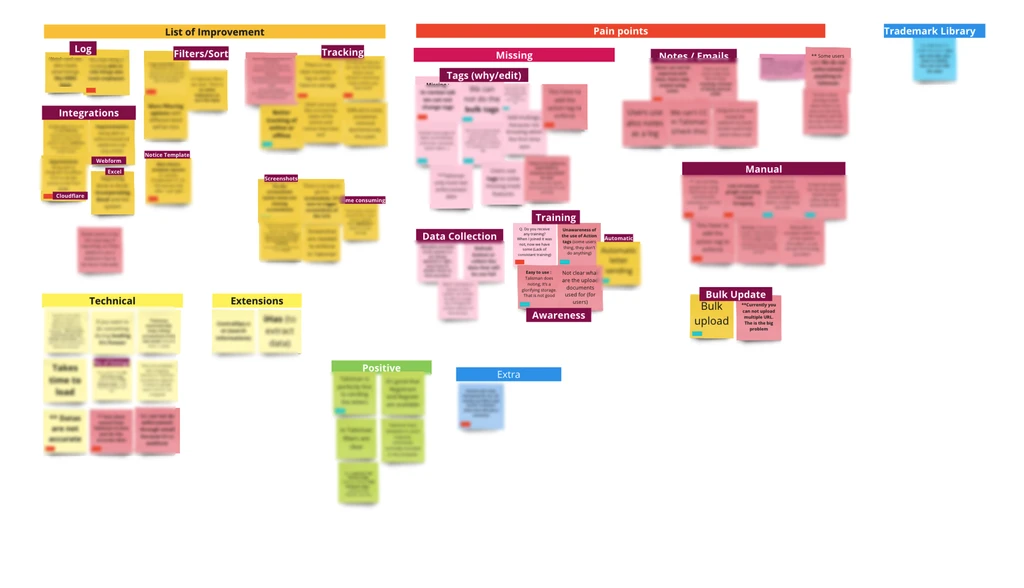
Analysts were sending legally incorrect enforcement notices because the platform expected them to know IP law. The fix was to move that expertise into the platform logic.
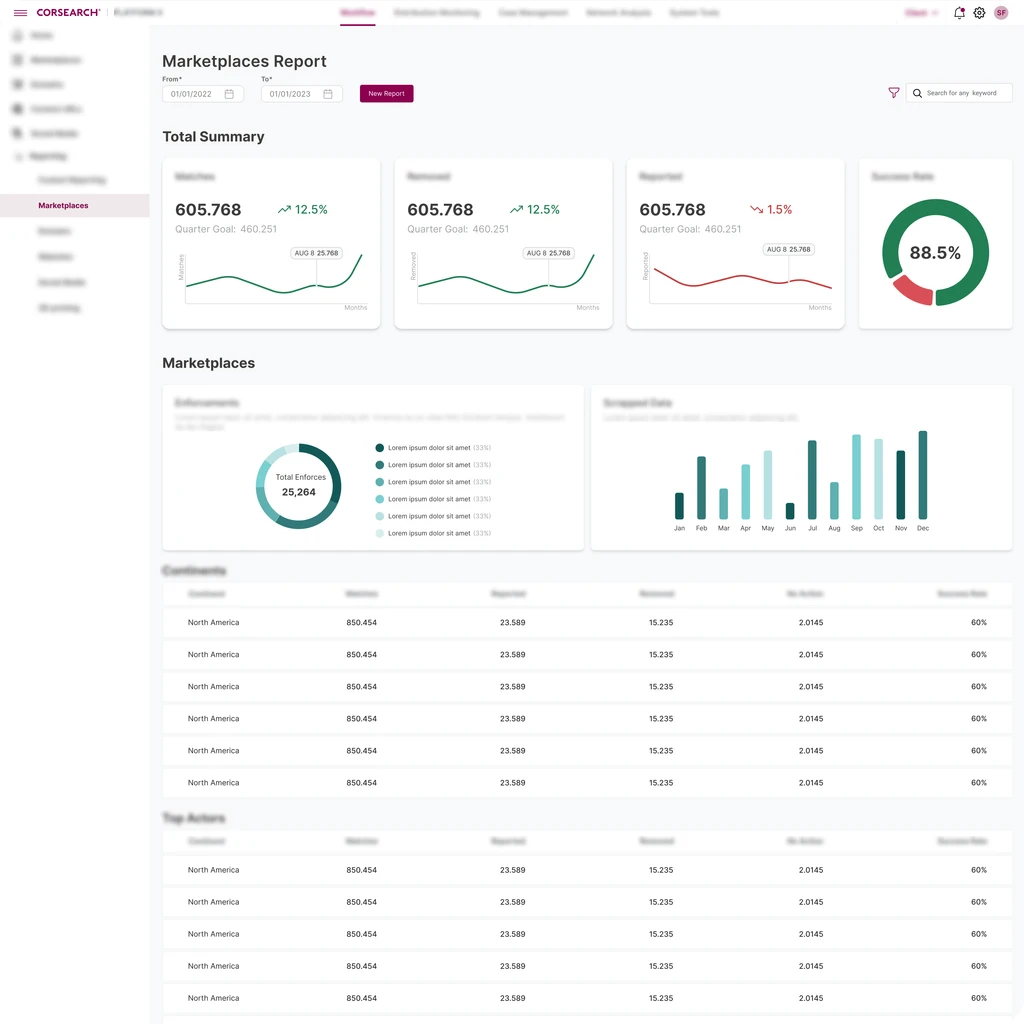
The platform's biggest usability problem was not the interface, it was that effective use required legal knowledge most analysts did not have. Analysts without IP law backgrounds were miscategorising infringement types, causing enforcement letters with the wrong legal basis. The solution: auto-labelling based on scraped data, guided categorisation at decision points, and a review step allowing analysts to send items to a partner queue before committing.
For the industry fragmentation: visual-heavy industries got AI image recognition in the primary view, logo matching, counterfeit image comparison, visual similarity scoring. Text-heavy industries got keyword highlighting, description analysis, and brand name variant detection. Same enforcement workflow, different AI assistance surface. With no inherited components from either legacy platform, I built the design system from scratch, every component matched to the engineering component library to keep design and build in tight sync across six teams. Storybook documentation was underway at handoff, alongside a design-to-code automation pipeline. Token implementation was scoped for the next phase but did not ship during my tenure, a known gap in the system.
I was one of the few people with the full picture across all 6 teams. Using that context to protect the product integrity felt necessary, even when it meant carrying more than the role should have required.
During year one, we lost several senior PMs and POs who held deep knowledge of both legacy platforms. Incoming PMs were starting from close to zero on platform context. Requirements came in that did not account for global platform logic, and problems were framed at surface level when the structural issue was something deeper.
I stepped into a role that went well beyond design, working directly with engineering leads to validate coherence, flagging when requirements would create downstream problems, and writing design briefs that also functioned as product briefs. Maintaining direct user relationships meant critical questions could be answered in hours rather than weeks.
Build deeply for one context first. A great solution for one industry is more valuable than a flexible but shallow solution for all of them at once.
Beta users rated the platform 4.6/5, a significant improvement on either legacy system. Enforcement time per listing reduced by 42% through automation and AI tooling. NPS reached 42. I was promoted to Senior Product Designer within the role.
Looking back: we built for all industries simultaneously from the start, which required flexibility that added complexity everywhere. The better approach would have been to fully solve one industry first, validate the approach, then extend systematically. I should have pushed harder on that sequencing argument earlier.
Reduced enforcement time per listing by 42%. User satisfaction improved 57.5% vs legacy platforms. NPS lifted to 42.
"Sergi brings an impressive blend of speed, intelligence, and autonomy to every challenge, especially where clear solutions are not obvious. His strategic approach made a huge impact."
"He is enthusiastic, positive and works quickly to understand the challenge at hand and design the right solution. As the team grew, he also grew in his role and remained an integral part of it."
"Sergi's proactive approach, team spirit, and ability to connect different teams had a significant positive impact. He addressed potential issues early, ensuring smoother workflows."
Sole designer supporting 6 engineering teams (FE and BE) and working across 4 Product Owners simultaneously. Junior designer joined in year two.
Employee Expense Management
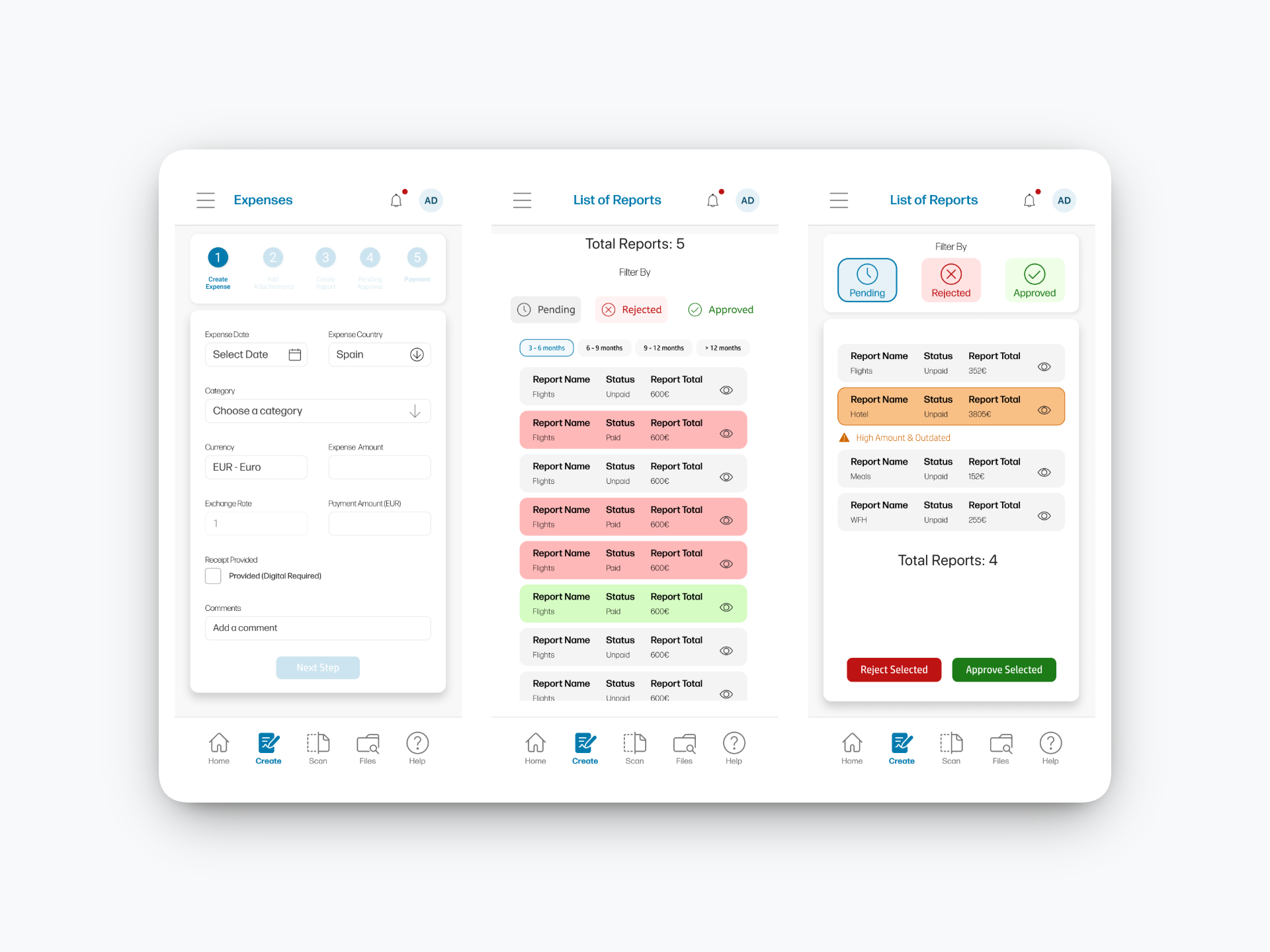
The first UX-led internal product in my organisation at HP. A mobile expense app replacing a legacy web tool used by 455,000 employees globally. Cut submission time by 58% and saved a projected 204,750 hours annually.
Read case study →